People walked past the barefoot boy in the pouring rain as if he didn’t exist.
Only the tired cleaning lady, walking home, stopped.
A minute later, a black SUV pulled up to the sidewalk—and that encounter changed their fates.
Maria held a thin bag containing the dinner she’d been allowed to take home after cleaning a wealthy home: some roast meat and two potatoes.
The bus hadn’t arrived, the sky had opened up with a downpour, and she was forced to walk to the old house on the outskirts, where her ailing mother was waiting.
Her medications were running low, and she had almost no money.
She spotted a child under the glass canopy of an expensive store.
The boy was sitting pressed against the wall.
He was wearing an expensive school uniform, and his backpack—clearly from an elite school—was soaking wet.
But his feet were bare, and his toes were blue from the cold.
His gaze was mature—too mature for such a small face.
Maria sat down next to him.
— Are you lost?
He nodded and pressed his lips together to keep from crying.
– What is your name?
“Noah,” he whispered.
“Mom died.
Dad was supposed to pick me up… but he wasn’t there.
I went on my own and got lost.”
The confession was quiet, but the pain in it was deafening.
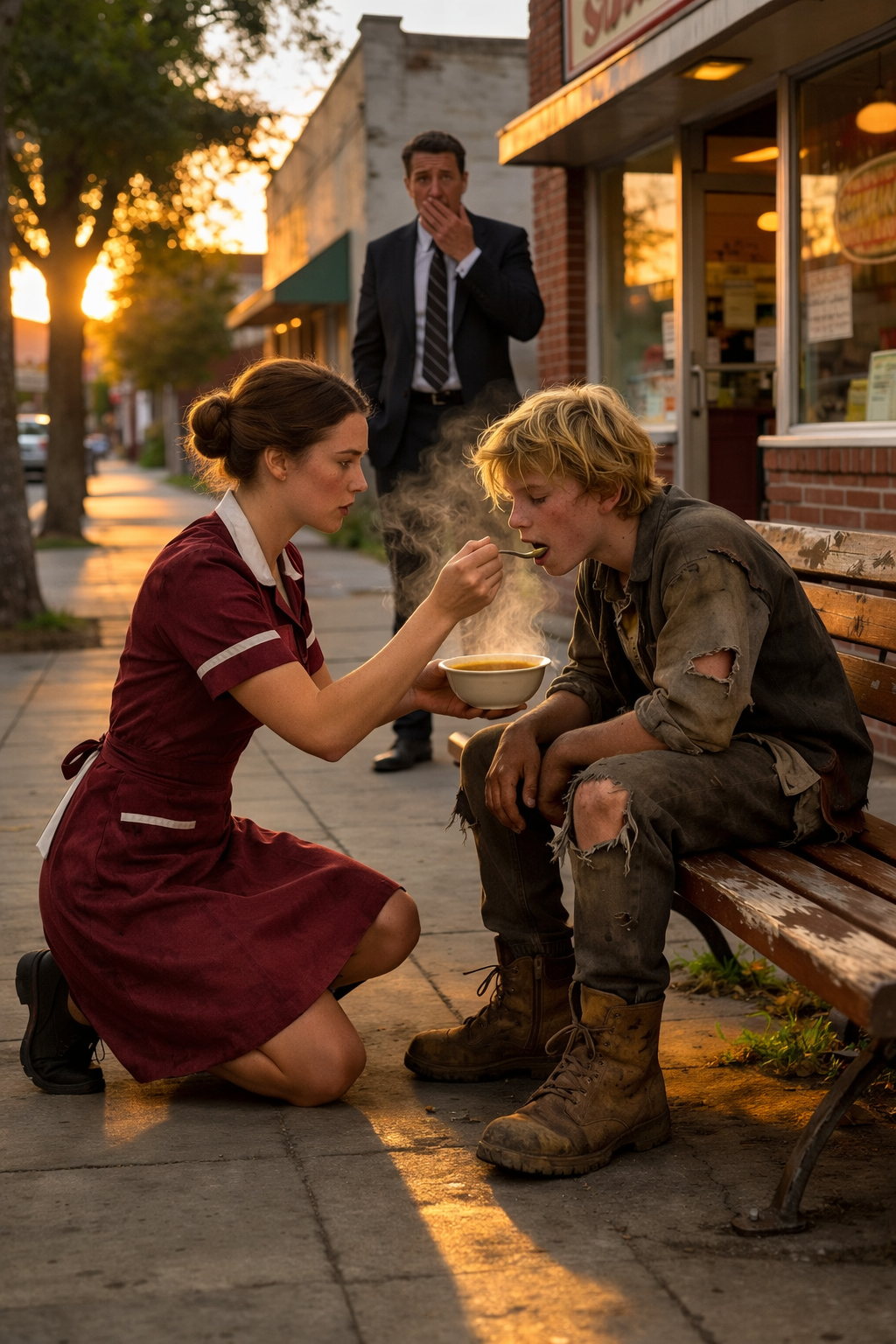
Maria recalled her own day of loss—when the world, too, had suddenly become empty.
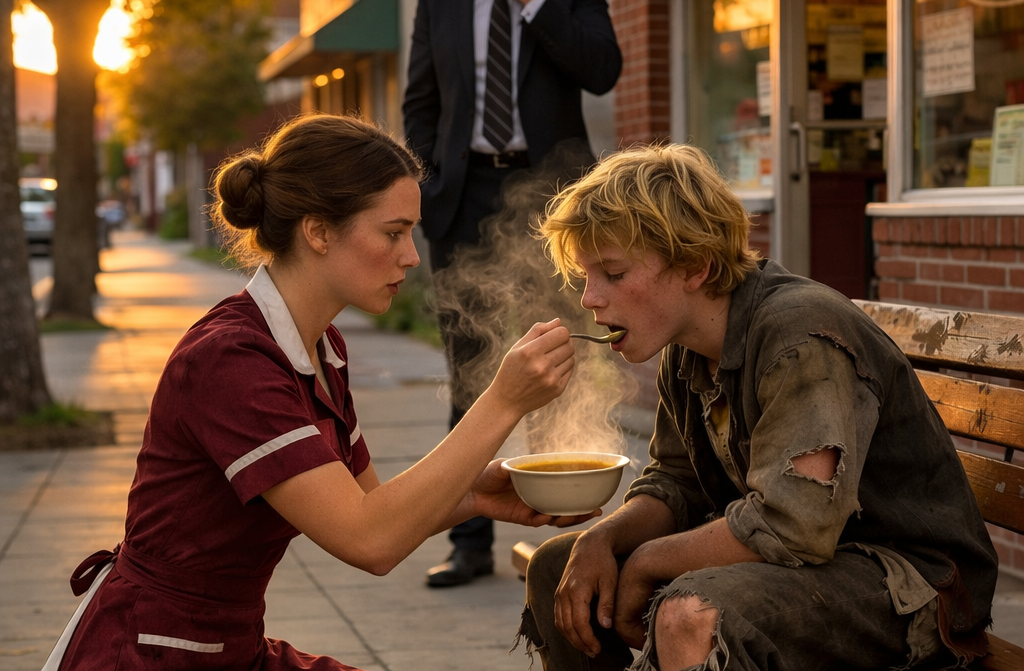
Without asking any questions, she opened the package and tore the meat in half.
“Let’s eat together.
This is all I have, but sharing is easier than starving alone.”
The boy ate hastily, as if he was afraid that the concern would disappear as suddenly as it had appeared.
“Daddy didn’t abandon you,” Maria said, carefully warming his palms.
“Sometimes adults get lost just like children.
Especially when they’re hurt.”
At that moment, the sound of the rain was cut through by the sharp screech of brakes.
A black car pulled up to the sidewalk.
A man in an expensive suit jumped out, oblivious to the rain and puddles.
— NOAH!
– Dad!
The man froze when he saw his son on the wet asphalt with a piece of food in his hands and an unfamiliar woman nearby.
He was a well-known entrepreneur, the owner of a major tech company.
After his wife’s death, he practically lived at work.
That day, meetings dragged on, his phone died, and time slipped away.
He didn’t notice how he’d missed the most important thing.
 El misterio del anciano sin hogar
Coming closer, he quietly asked:
— You… helped him?
“He was hungry,” Maria answered simply.
The man looked at the crumpled package and for the first time in a long time felt not power, but shame.
— I shouldn’t have allowed this.
Maria stood up.
“Take him home.
Hug him.
Be close.
What he needs now isn’t wealth, but a father.”
She was about to leave when he called out to her:
— What is your name?
— Maria.
He repeated the name as if he was afraid of forgetting it.
A few days later, the owner of the house where Maria worked forbade her from taking any leftovers.
That evening, she and her mother shared some dry bread and drank tea in silence.
The next morning, a car stopped in front of their modest house.
The man emerged without a driver or security guard.
He was holding an envelope.
“I’ve been looking for you.
Noah keeps talking about you.
I want to offer you a job—taking care of him.
Officially.
With decent pay.
We’ll also pay for your mother’s treatment and help you find housing near the school.
This isn’t charity.
It’s gratitude and necessity.”
Maria’s mother smiled faintly and whispered:
— Good always comes back.
Maria agreed.
On the very first day, Noah rushed towards her with such trust, as if he was returning to where he had always been expected.
And at that moment she realized: sometimes one simple act can change not only someone else’s life, but also your own destiny.