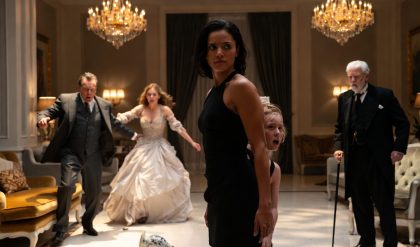
My Husband Poured Wine on My Head at Dinner — His Mother Laughed… But They Never Expected What I Did Next ”
When Isabella Moore married David Collins, she believed she was walking into a life of love and partnership.
David was charming during their courtship — attentive, gentle, and full of promises.
But everything changed the moment they returned from their honeymoon.
His mother, Margaret, made it clear that Isabella wasn’t good enough for her only son.
She criticized everything — her cooking, her clothes, even the way she spoke.
“You can’t even fry an egg properly,” Margaret sneered one morning.
“My son deserves someone better.” Isabella bit her lip and said nothing.
David, instead of defending her, shrugged and said coldly, “Mom’s right, Bella.
You should try harder.” From then on, the humiliation became part of her daily life.
She cooked, cleaned, and did laundry like a servant, but it was never enough.
Margaret’s sharp tongue cut deeper each day, and David’s indifference was worse than any insult.
At family dinners, Isabella sat silently while the two of them mocked her.
“She’s so quiet,” Margaret would say.
“Probably because she has nothing intelligent to add.” David laughed, never realizing each laugh chipped away at the love Isabella had for him.
One evening, at a large family celebration, things reached a breaking point.
Isabella had barely touched her drink when Margaret stood up and said loudly, “Careful, Isabella.
If you drink any more, you’ll embarrass my son like last time.” Everyone laughed.
Isabella flushed with shame.
“I’ve only had half a glass,” she said softly.
David slammed his glass on the table.
“Don’t talk back to my mother!” he shouted.
Then, to her horror, he grabbed his wine and poured it over her head in front of everyone.
The room fell silent.
Wine dripped from her hair onto her dress.
Margaret smirked.
“Maybe that’ll teach you some respect.” Isabella stared at them — her husband, her mother-in-law, the people laughing at her humiliation — and something inside her snapped.
She stood up, wiped the wine from her face, and said calmly, “You’ll regret this…”
David lets out a sharp laugh, but it dies almost immediately when he sees her eyes.
There is no trembling in them now.
No apology.
No desperate search for a kind face around the table.
Isabella stands still with red wine running down the side of her neck, soaking the pale blue dress she irons with her own hands that morning because Margaret says wrinkles make a woman look lazy.
Margaret leans back in her chair, still smiling.
“Sit down before you make this worse.”
Isabella turns toward her slowly.
“No.”
The word is soft, but it lands harder than David’s shout.
David’s cousin Peter lowers his fork.
Someone coughs.
At the far end of the table, David’s aunt Helen presses a napkin to her lips and looks away, ashamed, but not brave enough to speak.
David pushes his chair back.
“Bella, don’t start.”
“That’s what you always say,” Isabella says.
“Don’t start.
Don’t talk back.
Don’t embarrass me.
Don’t make my mother upset.” She looks at Margaret.
“But it’s funny.
Nobody ever tells her to stop.”
Margaret’s smile tightens.
“You ungrateful little girl.”
Isabella reaches for the small clutch on the chair beside her.
David’s eyes flick to it.
For the first time that evening, a crack appears in his confidence.
“What are you doing?” he asks.
Isabella opens the clutch and takes out her phone.
The screen is dark, but it is already unlocked.
A tiny red bar glows across the top.
Recording.
A murmur moves around the table.
David’s face changes.
It is only for a second, but Isabella sees it clearly.
Fear.
Not anger.
Fear.
“Turn that off,” he says.
Isabella looks at him.
“Why?”
His hand shoots out to grab the phone, but she steps back.
Wine drips from her hair onto the polished floor.
“David,” Margaret says sharply.
It is not a warning to protect Isabella.
It is a warning to protect him.
That tells Isabella everything.
“You have all heard what he did,” Isabella says, turning so every person at the table can see her.
“And you have all heard what she said.
I want you to remember your own silence.”
Peter looks down.
Helen closes her eyes.
David walks around the table toward her.
“Give me the phone.”
“Don’t touch me.”
The room freezes again.
He stops close enough for her to smell the wine on his breath.
His voice lowers.
“You’re making a mistake.”
“No,” Isabella says.
“I made the mistake the day I believed you were kind.”
His jaw clenches.
“You think one recording changes anything? You think anyone cares that my wife had a dramatic little moment at dinner?”
Isabella swallows.
Her heart is pounding, but her voice remains steady.
“I don’t need anyone here to care.”
She taps the screen once.
A sent message appears.
David sees only a glimpse of the name before she lowers the phone, but it is enough.
Mr. Lewis.
His face drains of color.
Margaret rises so quickly her chair scrapes against the floor.
“What did you send?”
Isabella looks at her.
“The recording.
And the photos.”
“What photos?” Peter asks, his voice barely above a whisper.
David turns on him.
“Shut up.”
The violence in his tone makes even Margaret flinch.
Isabella’s fingers tighten around her phone.
“The photos of the papers in David’s study.
The bank statemenTS. The emails between him and his mother.”
A heavy silence presses down over the room.
Margaret laughs once, too loudly.
“You’re ridiculous.
What papers?”
Isabella looks at her with the calm that comes when a heart finally accepts the truth it has been trying to deny.
“The petition.
The one David plans to file to claim I’m unstable.
The one that says I drink too much, behave erratically, and can’t manage my inheritance.”
Helen gasps.
David’s eyes flash.
“You went through my office?”
“You left the drawer unlocked.”
“You had no right.”
“I had every right when I found my name on documents I never signed.”
Margaret’s mouth opens, then closes.
There it is.
The first wound beneath the cruelty.
Not dislike.
Not ordinary contempt.
A plan.
Isabella can still feel the cold metal handle of David’s desk drawer in her palm.
She sees the folder again, thick and neatly labeled with her maiden name.
Isabella Moore.
Not Collins.
Moore.
As if her marriage is only a tool, not a life.
Inside are copies of her father’s estate papers.
Medical notes twisted out of context.
A statement from a private clinic she never visiTS. A letter drafted to a judge, describing her as emotional, impulsive, dependent on alcohol.
And at the bottom, a signature that looks almost like hers.
Almost.
David leans closer, speaking through his teeth.
“You don’t know what you’re talking about.”
“I know my father left me controlling interest in Moore House,” Isabella says.
“I know you need my signature to sell it.
I know I refused last month.
And I know that two days later your mother began telling everyone I drink.”
Margaret points a trembling finger at her.
“Because you do.”
“I drink half a glass of wine at dinner and spend the rest of the night washing your plates.”
A few people shift in their seaTS. Shame moves around the room like a draft.
David’s uncle Robert, who has not spoken all evening, slowly sets down his glass.
“David.
Is this true?”
David turns toward him with a furious smile.
“Of course it isn’t.
She’s upset.
Look at her.
She’s covered in wine and making accusations in front of everyone.
Does this seem stable to you?”
Isabella feels the trap closing.
He is still doing it.
Even now.
Especially now.
She takes a breath.
Then she reaches behind her neck and unclips a thin gold chain.
A tiny pendant rests in her palm, smaller than a coin.
David stares at it.
Margaret whispers, “What is that?”
“A recorder,” Isabella says.
“My father used to give me little things that made me feel safe.
He said people reveal themselves when they think no one is listening.”
Her eyes move from David to Margaret.
“It has been recording since I walked into this house.”
David lunges.
Peter stands so fast his chair falls backward.
“Don’t.”
David stops, but his fist curls at his side.
Peter looks at Isabella, pale and shaken.
“You should leave.”
Margaret snaps, “Sit down, Peter.”
“No,” Peter says, his voice cracking but firm.
“I saw what he did.
We all saw it.”
For a second, Isabella almost breaks.
Not because Peter’s words are enough.
They are not.
But because one voice in a room full of silence feels like air after drowning.
David laughs again, but now it sounds broken.
“This is absurd.
You’re choosing her?”
Peter looks at the wine spreading across Isabella’s dress.
“I’m choosing what I saw.”
Isabella turns toward the doorway.
David steps in front of her.
“Move,” she says.
“You walk out that door, you don’t come back.”
She looks at the dining room, at the flowers Margaret arranges, at the silverware Isabella polishes that afternoon, at the family portraits on the wall where everyone smiles as if cruelty is not sitting at the table with them.
“I know.”
David’s expression flickers.
He expects tears.
Begging.
Fear of losing him.
Instead, Isabella walks past him.
Her wet heels leave faint red marks on the cream carpet.
Behind her, Margaret’s voice rises.
“You think you can ruin this family?”
Isabella stops at the doorway and turns back.
“No,” she says.
“You already did.”
Then she walks into the hall.
The air outside the dining room feels colder.
The chandelier above the staircase throws light over the marble floor.
Isabella’s reflection appears in the dark window beside the front door: soaked hair, stained dress, red trails down her temple like blood.
For one breath, she does not recognize herself.
Then a hand touches her arm.
She turns sharply.
Helen stands there, holding a coat.
“Take this.”
Isabella stares at her.
Helen’s eyes are full of tears.
“I’m sorry.”
The words are small.
Too small for all the years she watches Margaret rule that house with a smile and a knife hidden in every sentence.
But Isabella takes the coat because her body is shaking now, and she refuses to let David see it.
Helen lowers her voice.
“Margaret isn’t only afraid of the recording.”
Isabella’s hand freezes on the coat.
“What do you mean?”
Helen glances toward the dining room.
“Ask about your father’s last visit here.”
The hallway seems to tilt.
“My father?”
Helen’s lips tremble.
“I shouldn’t have stayed quiet.
I tell myself it isn’t my business, but tonight…” She looks toward the dining room again.
“Tonight I can’t do it anymore.”
Isabella hears David’s footsteps behind them.
Helen steps back instantly, fear returning to her face.
David enters the hall, his expression controlled again.
That is worse than anger.
“Aunt Helen,” he says pleasantly.
“Go back inside.”
Helen looks at Isabella once, then hurries away, clutching her hands together.
Isabella turns to David.
“What does she mean?”
He blinks.
“What?”
“My father’s last visit.”
Something dark moves behind his eyes.
“Your father never came here.”
The lie is too quick.
Isabella feels it in her bones.
“He did,” she says.
David exhales, impatient.
“Bella, your father was sick.
He said strange things near the end.
Don’t let my aunt confuse you.”
“My father died suddenly,” Isabella says.
“He was not confused.”
David steps closer, lowering his voice again.
“You are exhausted.
You have embarrassed yourself enough.
Give me the recordings, apologize to my mother, and we can still fix this.”
She almost laughs.
“Fix this?”
“Yes.” His tone softens, the old charm sliding over his face like a mask.
“You’re my wife.
I don’t want to hurt you.”
The words land with a chill.
Because he does not say, I would never hurt you.
He says, I don’t want to.
Isabella steps back until her shoulders touch the front door.
“You poured wine over my head.”
“You provoked me.”
“My signature is forged.”
“You misunderstand things.”
“You plan to take my house.”
His eyes sharpen.
“That house is falling apart.
It is a burden.
I’m trying to help you.”
“By declaring me unstable?”
“By protecting you from yourself.”
There it is again.
Smooth.
Reasonable.
Poison wrapped in silk.
A knock sounds at the front door behind her.
David’s head snaps up.
Isabella turns and opens it.
Mr. Lewis stands on the porch in a dark overcoat, his silver hair damp from rain.
Behind him is a woman Isabella does not know, carrying a leather briefcase.
Two police officers stand near the steps.
David goes completely still.
Mr. Lewis looks at Isabella’s stained dress, then at her wet hair.
His face hardens.
“Mrs. Collins,” he says.
“Are you safe?”
The question breaks something in her.
No one in this house has asked her that in years.
She nods once, because if she speaks too quickly, she may cry.
David recovers.
“This is a private family matter.”
Mr. Lewis looks at him.
“Not anymore.”
Margaret appears in the hall behind David.
Her face is pale beneath her makeup.
“What is this?” she demands.
The woman with the briefcase steps forward.
“My name is Carla Jensen.
I’m a forensic document examiner retained by Mr. Lewis.”
David’s mouth tightens.
“For what?”
Carla opens the briefcase and removes a clear folder.
“For the forged signatures Mrs. Collins sent us earlier today.”
Margaret grips the banister.
Isabella turns to Mr. Lewis, stunned.
“Earlier today?”
He looks at her gently.
“Your email was scheduled to send at eight-thirty if you did not cancel it.”
David looks at Isabella.
His face shows understanding, then rage.
“You planned this.”
Isabella’s voice is quiet.
“No.
I protected myself.”
The officers enter the hall.
Their presence changes the air.
The house that always feels like Margaret’s kingdom suddenly feels like evidence.
One of the officers looks at Isabella.
“Ma’am, do you want to make a statement?”
David speaks before she can.
“She’s confused.
She’s been drinking.”
Mr. Lewis turns slightly.
“Officer, there is an active recording from before dinner began.
It includes Mrs. Collins being served one glass of wine, drinking less than half of it, and then being assaulted by her husband in front of witnesses.”
David’s lips part.
Margaret says, “Assaulted? It was wine.
Don’t be absurd.”
The second officer looks at Isabella’s hair and dress.
“Ma’am?”
Isabella’s fingers close around the gold pendant.
“Yes,” she says.
“I want to make a statement.”
David turns to her, and for the first time, he looks truly afraid.
“You don’t want to do this.”
She meets his eyes.
“I do.”
The dining room empties behind them.
Relatives gather at the hallway entrance, whispering, staring, pretending they are not relieved that someone else is finally holding the mirror.
The officer asks Isabella to describe what happened.
She does.
Her voice shakes once, when she says David poured the wine.
It steadies when she describes the documenTS.
Margaret interrupts twice.
The officer warns her twice.
Then Mr. Lewis opens his folder.
“There is another matter,” he says.
Isabella looks at him.
He hesitates, and that hesitation scares her more than the papers.
“What matter?” she asks.
Mr. Lewis glances at Helen, who stands near the dining room doorway, crying silently.
David says, “Careful.”
The word is low, meant for Mr. Lewis.
Mr. Lewis ignores him.
“Your father came to this house three weeks before his death.”
Isabella’s breath stops.
The room blurs at the edges.
“No,” she whispers.
“David said he never—”
“I know what David said,” Mr. Lewis replies.
“Your father called me from his car afterward.
He was upset.
He said he had discovered something about the Collins family and wanted to change the estate protections immediately.”
Margaret makes a sound that is almost a laugh and almost a choke.
“This is nonsense.”
Mr. Lewis looks at her.
“He also said if anything happened to him before the paperwork was changed, I should open the sealed envelope in his private vault.”
Isabella cannot move.
A sealed envelope.
Her father’s voice seems to fill the hallway, warm and tired, telling her to trust paper when people become slippery.
Always keep proof, little dove.
Proof does not tremble.
Mr. Lewis turns to Carla.
She removes another envelope from her briefcase, thick, cream-colored, sealed with old red wax.
Isabella recognizes her father’s handwriting immediately.
For my daughter, Isabella, if they try to take what is hers.
Her knees weaken.
David whispers, “Don’t open that.”
Everyone hears him.
Margaret closes her eyes.

That is the second truth announcing itself before anyone speaks.
Isabella takes the envelope with both hands.
The wax cracks under her thumb.
Inside is a single handwritten letter and a small flash drive taped to the page.
Her father’s handwriting leans slightly to the right, as it always does when he writes quickly.
Isabella reads the first line silently.
My dearest Isabella, if you are reading this, then David has stopped pretending.
A sob rises in her throat, but she holds it back.
She reads aloud because the truth deserves witnesses.
“I met with Margaret Collins today.
She asked me to release your inheritance early into a joint marital account.
When I refused, she became angry.
David joined us.
He did not know I had already noticed irregularities in Moore House development proposals.
The buyer is not independent.
It is a shell company connected to Margaret.”
Margaret whispers, “Stop.”
Isabella keeps reading.
“They intend to pressure you to sell.
If pressure fails, I believe they will attempt to question your mental fitness.
I am ashamed that I misjudged David.
I thought charm was kindness.
It is not.”
David stares at the floor.
Isabella’s voice breaks on the next line.
“Bella, I know you love him.
I know you will try to endure more than you should.
So I am leaving you proof, because love can make a gentle heart doubt what its eyes are seeing.”
She presses the letter to her chest.
The hallway is silent except for rain tapping against the windows.
Mr. Lewis gently takes the flash drive.
“The drive contains recordings from your father’s meeting with Margaret and David.
I reviewed them after receiving your scheduled email tonight.”
David turns on him.
“That’s privileged.”
“No,” Mr. Lewis says.
“It is evidence.”
Margaret suddenly moves toward Isabella.
“Give me that letter.”
Isabella steps back.
An officer blocks Margaret’s path.
Margaret’s mask tears apart.
“You stupid girl.
You think your father was a saint? He looked down on us.
All of you Moores look down on everyone.”
Isabella lifts her head.
“My father trusted you in his house.”
“He insulted me in mine.”
“He refused to let you steal from me.”
Margaret’s hand trembles.
“You don’t deserve that property.
You can’t run it.
You can’t even run a household.”
Something inside Isabella becomes very still.
“You made sure of that, didn’t you?” she says.
Margaret’s eyes narrow.
“You kept me exhausted.
You criticized everything until I stopped deciding anything for myself.
You wanted me small.”
Margaret says nothing.
David suddenly speaks, softer now.
“Bella, listen to me.”
She turns to him.
He looks almost like the man who once brings flowers to her office and remembers how she takes her coffee.
Almost.
But now she sees the calculation behind the softness.
“I made mistakes,” he says.
“My mother pushed too hard.
We can talk about the documenTS. We can fix the signatures.
But don’t destroy our marriage because of one awful night.”
“One awful night?” Isabella repeaTS.
His eyes glisten.
“I love you.”
The words reach for the old wound.
For a second, she remembers the day he proposes under the maple tree outside Moore House.
His hands shake when he opens the ring box.
He says he has never felt at home anywhere until her.
Now she understands.
He was not looking at her.
He was looking at the house behind her.
“No,” she says.
“You loved what I owned.”
David’s face hardens again, because the charm has nowhere else to go.
“You’ll regret humiliating me,” he says.
Isabella looks down at her stained dress, then back at him.
“You poured wine over my head in front of your family,” she says.
“I’m not the one who humiliates you.
I’m only the first person who refuses to hide it.”
Peter steps forward.
“I’ll give a statement.”
David spins toward him.
“You little coward.”
Helen walks to Peter’s side, shaking.
“So will I.”
Margaret looks at her sister-in-law with pure hatred.
“After everything I’ve done for you?”
Helen wipes her cheek.
“You taught me fear and called it loyalty.”
One by one, the room shifTS. Not everyone becomes brave.
Some simply stop pretending.
Robert says he hears Margaret tell guests Isabella is unstable before Isabella even arrives.
Peter says David jokes about needing his wife’s signature.
Helen says she sees the folder on David’s desk and does nothing, and shame bends her voice when she admits it.
Isabella listens, numb and burning at the same time.
Every sentence is a door unlocking.
The officer asks David to step aside.
David refuses.
The second officer repeats the request.
David looks around the hall, searching for the old world where everyone obeys him because Margaret trained them to.
That world is gone.
The officer places a hand near his belt.
“Sir.”
David steps back.
Margaret sinks into a chair by the staircase, her face gray.
Isabella looks at her and feels something unexpected.
Not pity.
Not forgiveness.
Something quieter.
The strange relief of seeing a monster become only a woman with nowhere left to hide.
Mr. Lewis turns to Isabella.
“We can file for an emergency protective order tonight.
We can also freeze any attempted transfer involving Moore House.”
“Do it,” Isabella says.
David looks at her sharply.
“Bella—”
“Don’t call me that.”
He falls silent.
The words surprise even her, but they feel right.
Bella is the name he uses when he wants her soft, confused, obedient.
Isabella is the name her father writes on the envelope.
Isabella is the woman standing in the hall with wine in her hair and proof in her hands.
Mr. Lewis nods.
“Isabella.”
Her chest aches at the sound.
Carla gathers the documenTS. The officers speak quietly with David.
Margaret keeps staring at the broken wax seal on the envelope as if it is a wound.
Then Isabella notices something on the floor near the dining room entrance.
A small silver key.
It has fallen from Margaret’s pocket when she stands too quickly.
Isabella bends and picks it up.
Margaret’s eyes snap to her hand.
“Give that back.”
Isabella studies the key.
It is old, with a small blue thread tied through the top.
She knows that thread.
Her father uses blue thread on every spare key to Moore House.
Her blood turns cold.
“Why do you have this?”
Margaret’s face tightens.
“I don’t know.”
Another lie.
Isabella grips the key until its teeth press into her palm.
“This is from my father’s house.”
David says quickly, “Keys get mixed up.”
“No,” Isabella says.
“Not this one.”
She looks at Mr. Lewis.
“My father said someone entered his study before he died.
He thought he misplaced documenTS.”
Mr. Lewis’s expression darkens.
“Yes.”
Margaret rises.
“This is absurd.
I am not standing here while this spoiled girl accuses me of—”
“Of what?” Isabella asks.
“Stealing? Forging? Breaking into my father’s study?”
Margaret’s mouth remains open, but no words come.
The officer looks at the key.
“Ma’am, we’ll need that.”
Isabella hands it over.
Margaret’s composure finally shatters.
“He was going to ruin everything,” she says.
The hall goes silent.
David turns toward her slowly.
“Mom.”
But she is not looking at him.
She is looking at Isabella, and her hatred is naked now.
“Your father had no right to interfere.”
Isabella’s voice comes out thin.
“What did you do?”
Margaret’s breathing turns harsh.
“I didn’t kill him, if that’s what you want to hear.”
Nobody moves.
“I went to get the papers,” she says.
“That’s all.
He wasn’t supposed to be home.”
Isabella feels the floor disappear beneath her.
“He was home?”
Margaret looks away.
“Answer me,” Isabella says.
Margaret’s lips tremble with rage, not remorse.
“He walked in while I was in the study.
He grabbed his chest.
He was already sick.”
Isabella takes one step forward.
“Did you call for help?”
Margaret’s silence answers first.
Then she says, “I panicked.”
A sound leaves Isabella that does not feel human.
David reaches for his mother.
“Stop talking.”
Margaret pushes his hand away.
“He was alive when I left.”
The officer’s face hardens.
“Mrs. Collins, you need to stop speaking until you have counsel.”
But Isabella hears nothing except the blood in her ears.
Her father on the floor of his study.
His hand reaching for the desk.
The blue-threaded key in Margaret’s pocket.
The missing documenTS. The sudden death everyone calls natural because there is no sign of violence, only an old heart that fails at the worst possible moment.
“You left him,” Isabella whispers.
Margaret looks at her, and something like fear finally appears.
Isabella steps closer.
“You left my father on the floor.”
“He was going to destroy David’s future.”
“He was trying to protect his daughter.”
Margaret’s face twisTS. “From us.”
“Yes,” Isabella says.
“From you.”
The officers move then.
One guides Margaret away from the staircase.
She does not fight at first.
She seems stunned by her own confession, as if the truth slips out of her mouth and becomes a living thing in the room.
David grabs her arm.
“Mom, don’t say anything else.”
Margaret looks at him with sudden, fierce panic.
“David, tell them I didn’t mean—”
“Don’t,” he snaps.
Isabella sees it.
The final cruelty.
He is not protecting his mother.
He is protecting himself.
Margaret sees it too.
Her face changes in an instant.
A lifetime of control collapses into betrayal.
“You said it would be simple,” she whispers.
David goes white.
The officer turns.
“What would be simple?”
David backs away.
“She’s confused.”
Margaret’s laugh is broken.
“Oh, now I’m confused?”
David says, “Mom.”
“No.” Margaret points at him.
“You wanted the house.
You wanted the money.
You said Isabella was weak enough to sign if we pushed her.
You said if her father got in the way, we would handle it.”
Isabella cannot breathe.
David’s eyes burn with hatred.
“You’re lying.”
Margaret’s voice rises.
“I protected you your whole life, and now you stand there letting them take me?”
The officer steps between them.
David turns toward Isabella as if she is the source of every ruin.
“This is your fault.”
Isabella looks at him, and there is no love left to hurt.
“No,” she says.
“This is the first honest thing your family has ever done.”
David lunges toward her, not far, not enough to reach her before the officer catches him, but enough to end the last illusion.
His face twists, his hand outstretched, not with love, not with regret, but possession.
The officer restrains him.
Another takes Margaret by the arm.
The dining room watches in stunned silence as David and his mother are led toward the door of the house they rule by fear.
At the threshold, Margaret turns back.
For one heartbeat, Isabella expects another insult.
Instead Margaret looks at the wine in Isabella’s hair, the letter in her hand, the relatives who no longer defend her, and the fear finally drops from her face.
“You should have stayed quiet,” she whispers.
Isabella walks closer, stopping just beyond the officer’s shoulder.
“I did,” she says.
“For too long.”
The door opens.
Rain blows into the hall, cold and clean.
David looks at her one last time.
“You’ll have nothing without me.”
Isabella holds up her father’s letter.
“I already have what you tried to take.”
They are taken into the rain.
The door closes.
The silence that follows is not peaceful.
It is raw.
Torn open.
Full of people who do not know where to put their eyes.
Isabella stands in the hall, shaking now so hard the letter trembles in her fingers.
Helen approaches slowly.
“Isabella…”
Isabella turns to her.
Helen stops.
“I’m sorry,” she says again.
This time the words sound different.
Not enough, but real.
“I should have spoken when I first saw the folder.
I should have spoken when Margaret started lying about you.”
Isabella looks at Peter, at Robert, at every face in the hallway.
“Yes,” she says.
“You should have.”
No one argues.
Mr. Lewis steps beside her.
“Do you want to leave?”
Isabella looks down at the red stains on the marble.
Her footprints mark the hall from dining room to door.
A path of humiliation.
A path of escape.
“No,” she says quietly.
“Not yet.”
She walks back into the dining room.
Everyone parts for her.
The table remains exactly as it was.
Candles flicker.
Plates sit half-full.
Margaret’s wineglass is still near the centerpiece.
David’s chair is pushed back, crooked.
Isabella reaches for a clean napkin and wipes her face.
Slowly.
Deliberately.
Then she takes off Helen’s coat and places it over the back of a chair.
She looks at the seat where she sits all evening, silent and small, while people laugh.
She does not sit there.
She walks to the head of the table.
Margaret’s chair.
She stands behind it, both hands resting on the carved wood.
“I am leaving this house,” she says.
“I am filing charges.
I am ending this marriage.
And none of you are to contact me unless it is to tell the truth in writing.”
Robert nods.
Peter nods.
Helen cries quietly.
Isabella’s throat tightens, but she does not soften the words.
“My father is gone.
I cannot ask him what his last moments felt like.
I cannot give him back the help he deserved.
But I can make sure the people who used his kindness as a weakness never touch what he built.”
She looks at the stained tablecloth, at the wine bottle, at the place where David’s hand grabs it.
Then she picks up the bottle.
Several people tense.
Isabella carries it to the sink in the small serving alcove and pours the rest of the wine down the drain.
The red stream twists away, dark and final.
When the bottle is empty, she sets it down without breaking it.
She has broken enough by surviving.
Mr. Lewis waits near the doorway.
“The car is outside.”
Isabella nods.
She walks through the hall again, past the red footprints, past the family portraits, past the staircase where Margaret loses her key and her power in the same breath.
At the front door, she pauses.
The rain has softened.
The police lights glow faintly at the curb.
David stands near one of the cars, speaking rapidly, but no one in uniform looks impressed.
Margaret sits in the back seat of another car, staring through the window like a queen discovering glass cannot become a throne.
Isabella steps onto the porch.
Cold rain touches her face and mixes with the drying wine.
For a moment, it feels as if the night itself is washing her clean.
Mr. Lewis opens the car door, but Isabella does not get in yet.
She unfolds her father’s letter once more beneath the porch light.
There is one line at the bottom she has not read aloud.
You do not have to become hard to become free.
Her tears come then.
Quietly.
Finally.
Not for David.
Not for the marriage.
For the woman who keeps swallowing pain because she thinks endurance is love.
For the daughter who misses her father.
For the silence that almost buries her.
Peter appears in the doorway behind her.
He holds something small in his hand.
“Isabella,” he says carefully.
She turns.
He offers her the pendant recorder.
In the chaos, she has dropped it near the hall table.
“I thought you’d want it.”
She takes it.
“Thank you.”
He hesitates.
“For what it’s worth, I’m ashamed.”
She looks at him, and her voice is tired but clear.
“Then do something useful with it.”
He nods.
Isabella steps into the rain and climbs into the car.
As it pulls away, she looks back once.
The Collins house rises behind her, bright windows glowing against the dark, a beautiful place full of ugly secrets finally spilling into the open.
For the first time since her wedding day, Isabella does not feel small inside its shadow.
She presses her father’s letter to her heart, closes her eyes, and lets the rain on the window blur David’s face until there is nothing left of him but a stain disappearing in the dark.