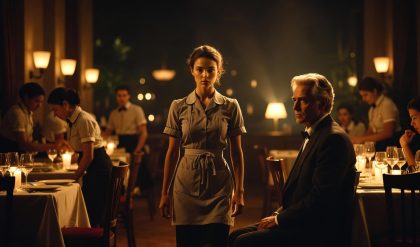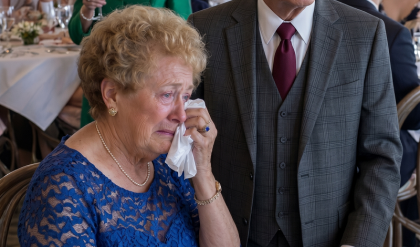
A kind-hearted waitress paid for the elderly man’s lunch, and soon his wealthy daughter appeared in the cafe.
An elderly man stood at a small counter in a busy café.
He carefully poured a handful of change onto the table and began counting it, shoving the coins into a pile with slightly trembling hands.
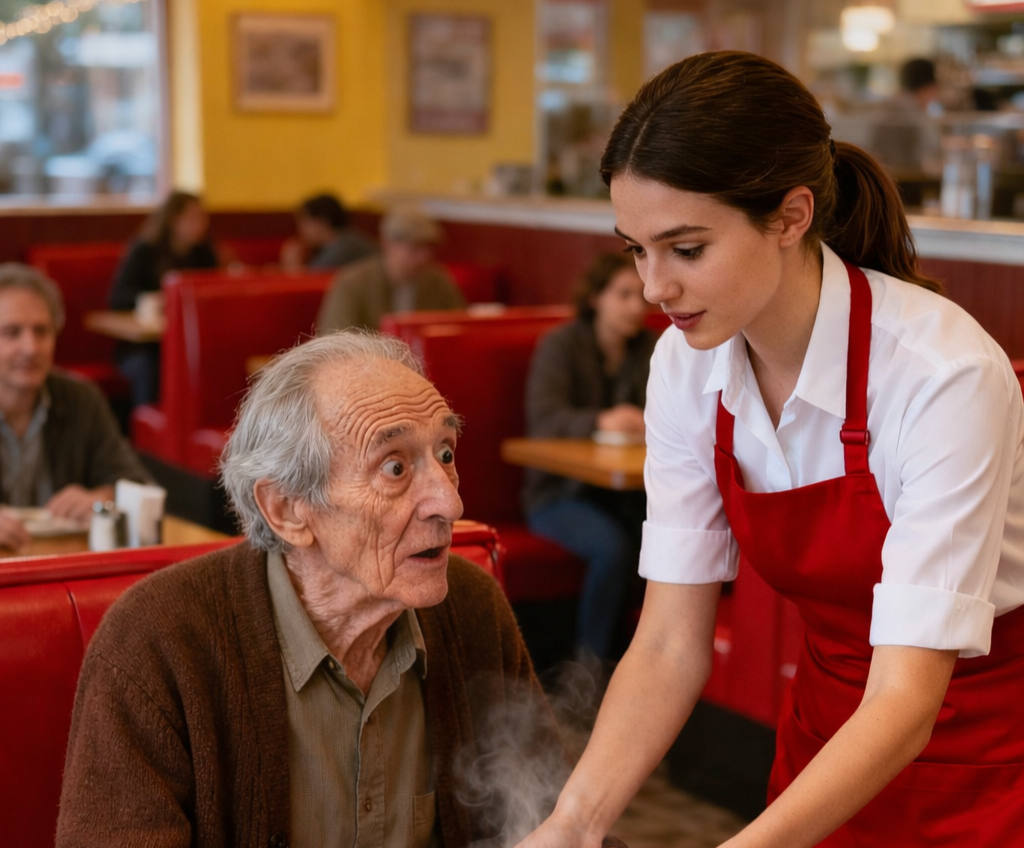
“Soup with rice – twelve dollars,” the cashier said indifferently.
The old man sighed and began counting again.
– Now… now…
He separated a few coins, but returned them back again.
The staff at the counter looked at each other and began to speak quietly:
— He’s paying in small change again.
— Maybe we should tell him this isn’t a free cafeteria?
— Let him get something cheaper.
We’ve already got a line.
The old man heard everything and looked up awkwardly.
“Would you like some soup?” the cashier asked irritably.
“I… can take half.
Or just the soup,” he answered quietly.
At that moment, a young waitress approached the counter.
“Take the whole soup,” she said softly.
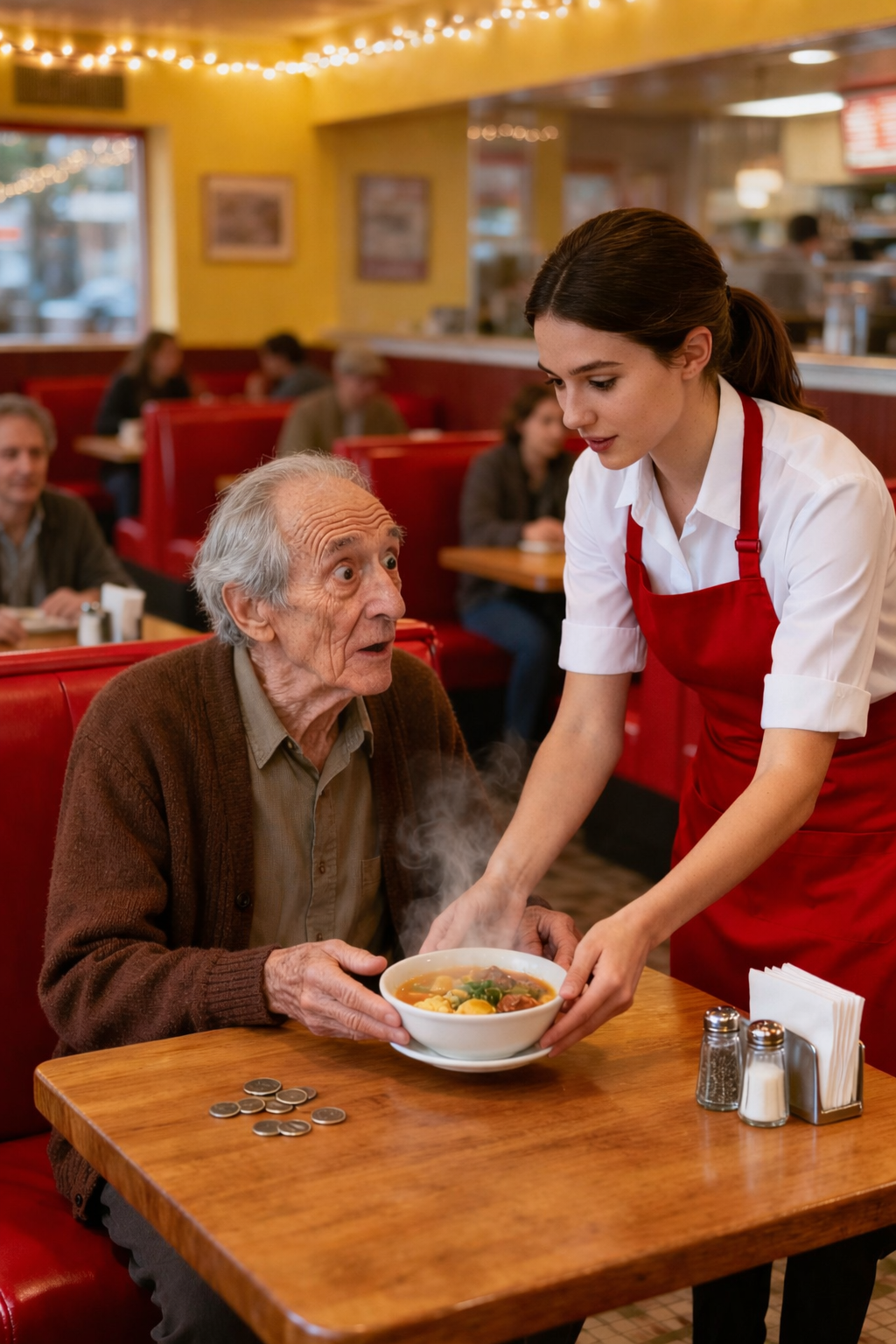
She placed a tray with a hot plate in front of him.
— He’s a little short.
I’ll pay extra.
The cashier frowned skeptically:
– Why? He’ll come again later.
“Because he’s hungry,” the girl answered calmly.
A few minutes later she brought the order.
“I didn’t order rice,” the old man said in surprise.
“It’s a gift from the establishment,” she smiled.
“You are too kind…” he whispered.
— Eat while it’s hot.
He took the spoon carefully, as if he was afraid that the food would be taken away.
But then the manager came out of the kitchen.
“Who gave permission to add rice?” he asked sharply.
“I did.
And I paid for it,” the waitress answered confidently.
This is a business, not a place for charity.
The old man immediately stood up:
– I can leave… sorry.
“No, please stay,” the girl said hastily.
But the manager coldly said:
– If you don’t have money, don’t come.
The old man lowered his head:
— I didn’t mean to cause any inconvenience…
He sat down again, hunched over.
The waitress quietly said to the cashier:
– Treat it as unpaid.
He mustn’t know.
Then she sat opposite the old man while he ate.
“My daughter is busy… I don’t want to disturb her,” he said quietly.
“You’re not bothering anyone,” she replied.
He smiled sadly:
— Now people don’t seem to notice me.
– I see you.
He ate slowly, enjoying every sip—it was obvious that he hadn’t had warm food for a long time.
At that moment, the door opened.
An elegant woman entered the café, carefully surveying the room.
She walked up to the counter:
— Who is the manager here?
“I am,” he answered confidently.
“How can I help?”
– I’m looking for my father.
Her gaze fell on the corner table.
– Dad?
The old man raised his head:
– Claire?..
She hurried to him:
— Why are you alone? Have you eaten?
— I… tried.
This girl helped me.
Claire looked at the waitress:
— Did you pay for it?
“He was just a little short.
It’s not significant,” she replied modestly.
Claire straightened up and turned to the manager.
– And what did you do?
“We treat all clients equally,” he answered tensely.
The old man said quietly:
— He asked me not to come if I didn’t have money.
Claire’s face immediately turned cold.
— Your name.
And the owner’s name.
“For what reason?” the manager chuckled.
Claire took out her phone:
 The cleaning lady’s daughter entered the room of a comatose millionaire… what happened next shocked everyone.
– This is Claire.
Close the establishment immediately.
The manager laughed:
– You can’t close my restaurant.
She looked at him calmly:
– This is not your restaurant.
I own this building.
Silence reigned in the room.
– And your lease ends today.
The manager turned pale:
– You’re kidding.
“Check it,” she answered calmly.
Then she turned to the waitress:
— What is your name?
— Mia…
– Mia, pack your things.
The girl got scared:
— Am I being fired?
Claire smiled:
– No.
You become the new manager.
A surprised whisper went through the hall.
“Why me?” Mia asked, confused.
Claire looked at her father:
– Because you were the only one who saw a person in him.
She added:
— These are the kind of people who should run places where others are fed.
A few minutes later, a lawyer entered the café and handed over documents terminating the lease.
“You have until the end of the day,” Claire said calmly.
The manager realized that things were serious.
“You can’t run a restaurant on pity,” he muttered.
Claire replied:
– But it can be easily destroyed by indifference.
She turned to Mia:
— When does the influx of clients begin?
– In twenty minutes…
– Then it’s time to get ready.
— I don’t know how to manage a restaurant…
— You have already done the most important thing.
– What?
— We saw someone who needed help.
The old man walked up to the counter and deposited twenty dollars.
— For soup.
– No need…
He smiled softly:
— My wife always said: good should come back.
Claire took him by the shoulder:
– Let’s go home.
– I didn’t want to bother you…
– You can never be a burden to me.
The old man looked around the room, then looked at Mia:
– You reminded me of my wife.
– Is it true?
– She also always fed those who were hungry.
Mia smiled:
– So she was wonderful.
— The best one.
Before leaving, Claire said:
— We’ll start all over again tomorrow morning.
You’ll succeed.
At the door the old man turned around:
– This was the best soup I’ve had in a long time.
“I’m glad,” Mia answered quietly.
The door closed.
There was a pause in the hall.
And suddenly someone asked:
– So… are they still serving lunch?
Mia looked around the room, picked up a notepad and said confidently:
– Yes, sure.
And for the first time, this place became more than just a job for her.
It made sense.
Because even the smallest act of kindness can change someone’s destiny.
And sometimes the person you helped…
turns out to be the key to new opportunities that you never even imagined.