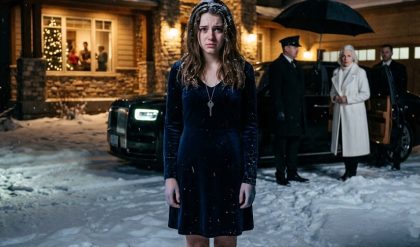
The Inheritance of Truth
“She already knows, Rachel,” I said, my voice eerily steady against the backdrop of her frantic gasping.
“And so do I.”
The line went deathly silent.
In that quiet, I could almost hear the walls of the world Rachel had built—a world of manufactured crises and stolen futures—cracking under the weight of reality.
Beside me, my grandmother didn’t look like an old woman anymore; she looked like a judge delivering a final verdict.
She reached over, took my phone, and ended the call with a deliberate click.
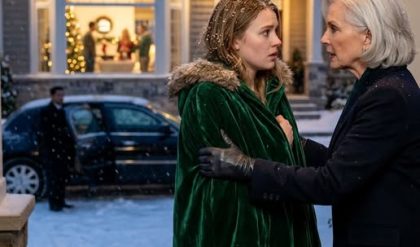
“The car is outside,” she said.
“It is time they learned that an empire built on deception cannot survive the truth.”
The drive to my parents’ house was a blur of gray streets and shifting light.
When we arrived, the scene inside was chaos.
My father sat at the kitchen table, his head in his hands, surrounded by the physical evidence of his complicity: bank statements, invoices, and a lifetime of favoritism documented in ink.
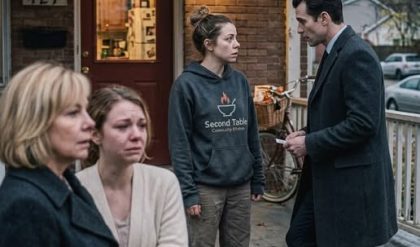
My mother was pacing, her face blotchy and frantic, while Todd stood in the corner, looking as though he had aged ten years in a single afternoon.
Rachel was huddled on the sofa, her mascara running, looking less like a victim and more like a child whose favorite toy had been broken.
My grandmother didn’t wait for pleasantries.
She walked to the center of the room and placed the folder on the table.
It sounded like a gunshot.
“You didn’t just borrow money,” I said, my voice low but cutting through the stifling heat of the room.
“You stole the autonomy I spent eight years working for.
You stole the peace of mind I never had.
And you did it while telling me to be grateful for the crumbs you allowed me to keep.”
My mother tried to interject, a rehearsed script of ‘we did it for the family’ ready on her tongue, but my grandmother held up a hand.
“The family is not the lie you tell yourselves to sleep at night,” she said, her voice resonant and cold.
“The family is the daughter who worked until her hands bled, and the one who chose to feed off her success like a parasite.”
 THE FINAL JUDGMENT
Todd finally moved, walking toward the door.
He looked at me, then at Rachel, his expression a mixture of profound betrayal and exhaustion.
“I didn’t know,” he whispered to me, though I knew it was a hollow comfort.
He turned to Rachel.
“I’m going to my parents’.
We’re done, Rachel.
I’m not spending another day in a life that isn’t real.”
As the front door closed, the air in the house seemed to shift.
For the first time, my parents looked at me not as the reliable, distant doctor they could manipulate, but as a person with the power to dismantle their entire existence.
I saw the fear in their eyes—not of me, but of the accountability that had finally arrived.
I didn’t scream.
I didn’t beg for their love.
I simply picked up the folder, looked my parents in the eye, and realized that the silence I had feared was actually the sound of my own freedom.
“Keep the house,” I said, my voice devoid of the pain that had defined me for so long.
“Keep the pretenses.
I’m starting my residency in a city where my name isn’t tied to your secreTS. Don’t call me.
Don’t write to me.
You chose your daughter over your child, and now you have neither.”
I walked out of that house with my grandmother at my side, leaving behind the wreckage of a family that had never known how to love anything but themselves.
As we stepped out into the cool evening air, I took my first real breath in years.
The future wasn’t just something I had earned; it was something I was finally free to claim, completely and entirely on my own.
THE END